
Quartz vs Granite Countertops: Which Is Right for Your Lebanese Kitchen?
Choosing between quartz vs granite countertops is one of the biggest decisions in any kitchen renovation. The countertop is the surface you touch every day: where you knead dough, squeeze lemons, rest a hot pot of rice and gather the family around mezze. Choose well and it will look good for decades. Choose badly and you will notice every stain, scorch mark and seam.
Here is the short answer. Quartz is an engineered surface that is non-porous, very consistent in color and the easiest to keep spotless, but it dislikes direct heat and strong sunlight. Granite is a natural stone that copes better with heat and sun and gives every kitchen a one-of-a-kind look, but it may need occasional sealing. This guide compares both in detail and ends with a practical checklist for kitchens in Lebanon.
Key takeaways
- Quartz is roughly 90 to 95 percent ground natural quartz bound with resin and pigments, which makes it non-porous and very uniform.
- Granite is quarried natural stone. Every slab is unique, and it handles heat and sunlight better than resin-bound surfaces.
- Neither surface is heat-proof. Use trivets for hot pans on both, and always on quartz.
- For bright, sun-facing kitchens and outdoor kitchens, granite is usually the safer choice. For busy family kitchens where stains are the main worry, quartz is hard to beat.
- Good fabrication, from templating and seams to edges and cut-outs, matters as much as the material itself.
What is the difference between quartz and granite countertops?
Both materials are sold as stone countertops, and both are hard, dense and long-lasting. The real difference is how they are made, and it explains almost every other difference in this guide.
Granite: a natural stone cut from the quarry
Granite is an igneous rock formed from slowly cooled magma, made mostly of quartz, feldspar and mica. It is quarried in large blocks, sliced into slabs and finished as polished, honed or brushed surfaces. Nothing is added to create the pattern, so the speckles, veins and color variations are entirely natural. No two slabs are identical, which is why you should choose the actual slab rather than a small sample.
Many granite slabs also receive a resin treatment at the factory to fill tiny natural fissures. According to the Natural Stone Institute, both resined and unresined slabs are extremely durable and will outlast most of our lifetimes.
Quartz: an engineered surface made from natural quartz
Quartz countertops, also called engineered quartz or engineered stone, are manufactured. Crushed natural quartz, typically 90 to 95 percent of the material, is blended with about 5 to 10 percent polymer resins and pigments, compacted by vibration, then cured and polished, as LX Hausys explains in its guide to quartz composition. Because each slab is made in a controlled process, its color and pattern are consistent, and designs range from solid whites and concrete grays to dramatic marble-look veining.
Quartz vs granite countertops: side-by-side comparison
The table below summarizes how the two materials compare on the questions homeowners ask most. The sections that follow explain each point.
| Feature | Quartz | Granite |
|---|---|---|
| What it is | Engineered surface: ground natural quartz bound with resin and pigments | Natural stone quarried in blocks and cut into slabs |
| Look | Consistent color and pattern, from solid tones to marble-look veining | Unique natural speckles and movement; every slab differs |
| Heat | Resin can scorch or discolor under direct heat; always use trivets | Tolerates heat well, but trivets are still recommended |
| Stains and sealing | Non-porous; never needs sealing | Very dense; some slabs benefit from a quality sealer |
| Sunlight and outdoor use | Standard indoor quartz can discolor under strong UV | Mineral colors are stable in sun; popular for outdoor kitchens |
| Scratches and chips | Very hard; edges can chip under heavy impact | Very hard; edges can chip under heavy impact |
| Daily cleaning | Warm soapy water; avoid harsh chemicals | Warm water and a pH-neutral stone cleaner |
| Best for | Busy family kitchens and marble looks without marble’s upkeep | Sunny kitchens, outdoor kitchens and lovers of one-off natural stone |
Heat resistance: can you put hot pans on quartz or granite?
This is where the two materials differ most. Granite formed under intense heat deep in the earth, so it handles hot cookware better than most countertop surfaces. Even so, it is not heat-proof. A very hot pan placed repeatedly in the same spot, or a sudden temperature shock, can stress the stone, and heat can mark the resin or sealer on treated slabs. A trivet costs very little compared with a repair.
Quartz needs more care. Its stone content tolerates heat, but the resin that binds it does not, and a pan straight from the hob or oven can leave a pale scorch mark or even crack the slab. Manufacturers are clear about this: Caesarstone’s care and maintenance guidance says to always place hot cookware on trivets and hot pads.
Practical heat habits for both surfaces
- Keep two or three trivets beside the hob and the oven so they are always within reach.
- Never put a hot pan, a portable gas burner or an electric grill directly on the counter.
- Raise slow cookers, air fryers and coffee machines that release heat underneath on a board or trivet.
Stains, sealing and everyday maintenance
In a Lebanese kitchen, the real test of a countertop is not one dinner party but daily life: lemon juice, olive oil, Turkish coffee, pomegranate molasses, turmeric and red wine, often all on the same day.
Quartz: non-porous and low-maintenance
Because resin fills the spaces between the quartz grains, quartz is non-porous. Liquids sit on the surface instead of soaking in, so it never needs sealing. Warm soapy water is enough for everyday cleaning. Avoid strong chemicals and solvents, strong acids or alkalis and oven cleaners, which can damage the surface. Caesarstone also advises against cream-type cleaning products and oil-based cleaners, which can leave a residue.
Granite: dense stone that may benefit from a sealer
Granite is dense, and the Natural Stone Institute notes that most granite countertops do not need to be sealed. Many still benefit from a quality sealer that further reduces the absorption of water and oil, and the institute says a good sealer can last ten to fifteen years. Lighter and more absorbent granites gain the most from sealing.
A simple home check helps. Put a few drops of water on the surface and wait 10 to 15 minutes. If the stone darkens, it is absorbing liquid and is a good candidate for sealing. For daily cleaning, use warm water with mild dish soap or a pH-neutral stone cleaner, and avoid vinegar, harsh acidic cleaners and abrasive powders that can wear down a sealer.
Whichever material you choose, wipe up oil, lemon juice and strongly colored foods such as turmeric promptly. Quick cleaning prevents almost every stain.

Sunlight and UV: an important question for Lebanese homes
Many kitchens in Lebanon are bright, open-plan spaces with large windows or doors onto a balcony, and the summer sun is strong. This matters far more for quartz than for granite.
The resin and pigments in standard indoor quartz can slowly change color under prolonged, direct ultraviolet light. For that reason, quartz manufacturers generally advise against using their standard indoor ranges outdoors or where the surface receives intense direct sunlight, and some brands make dedicated outdoor-rated products instead. Granite takes its color from natural minerals, so it is far more stable in the sun. That is why it is a popular choice for outdoor kitchens and barbecue areas on terraces, rooftops and mountain homes.
If you love quartz and have a sunny kitchen
- Note where direct sun falls on the counters through the day, especially in summer.
- Use blinds, sheer curtains or UV-filtering window film on strongly sunlit windows.
- For terraces, roof gardens and outdoor kitchens, choose granite or a surface specifically rated for outdoor use.
Looks and design: natural character or consistent elegance?
Appearance is often the deciding factor, and both materials offer a wide palette.
Why people choose granite
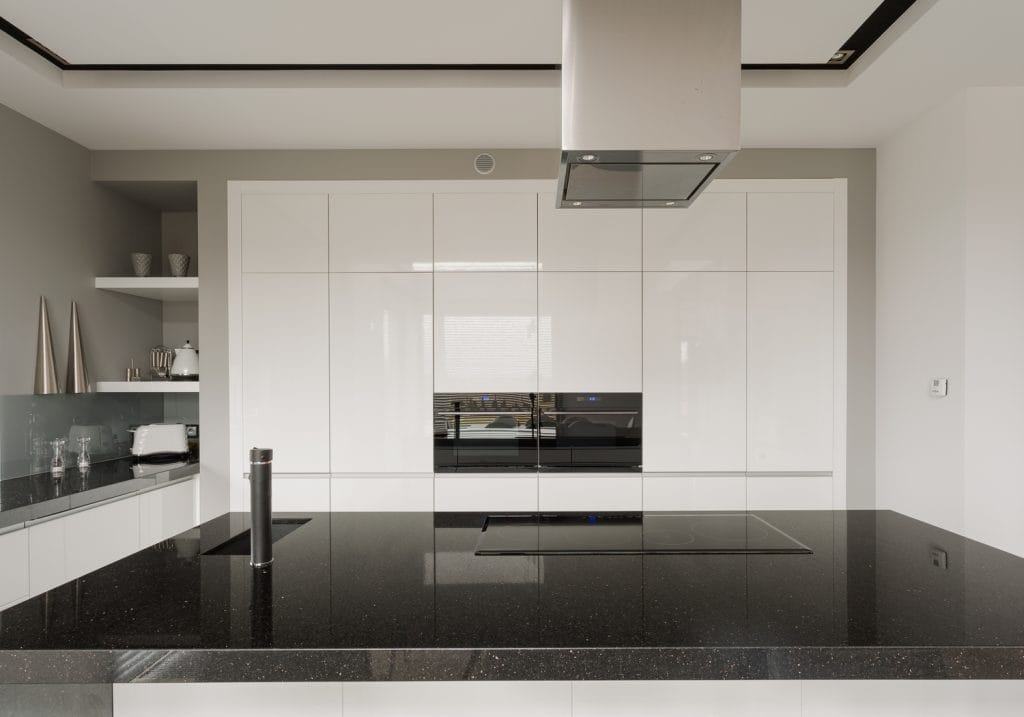
Granite offers depth and movement that only nature creates: deep blacks with silver flecks, warm browns and golds, cool grays and dramatic veined varieties. It suits classic, rustic and Mediterranean kitchens as well as contemporary ones, especially in honed or brushed finishes. Because each slab is unique, it is essential to see the full slab before fabrication.
Why people choose quartz
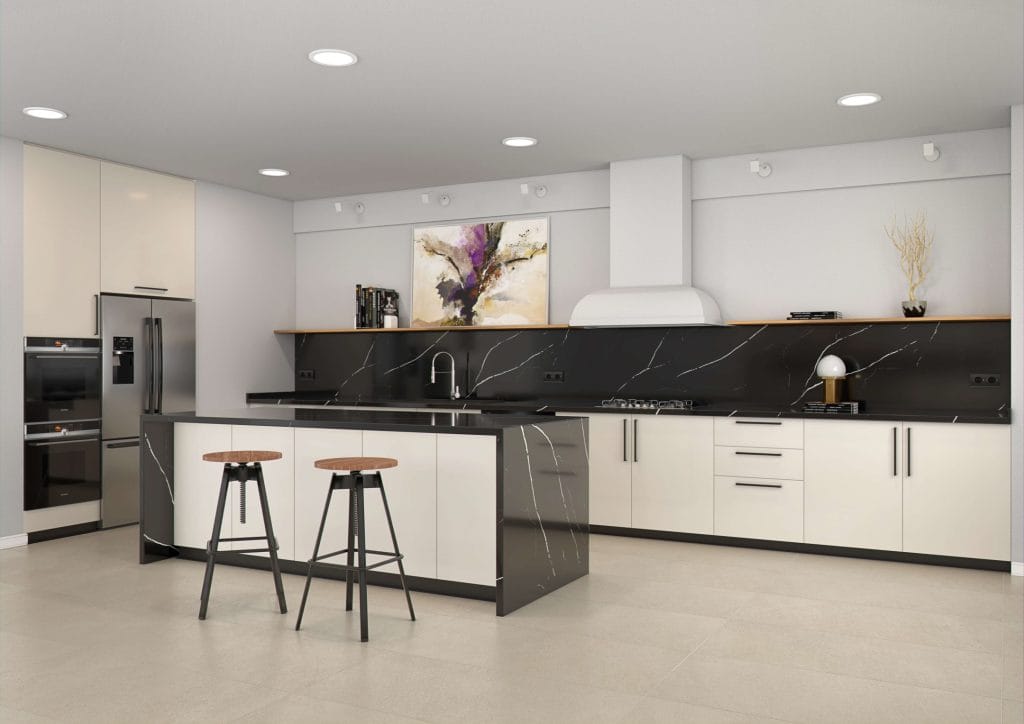
Quartz is ideal if you want a predictable result. The slab is very close to the sample, so long runs, islands, backsplashes and waterfall ends match closely. It is also one of the most popular ways to achieve the look of Calacatta or Carrara marble without real marble’s sensitivity to acids and scratches. Browse examples in our quartz collection and compare them with natural options in our granite collection. If you are drawn to genuine marble, explore our marble collection as well.
Durability, scratches and chips
Both materials are among the hardest countertop surfaces available. Quartz, the mineral, rates 7 on the Mohs hardness scale, and granite generally sits around 6 to 7, so everyday knives and utensils will not easily scratch either surface. Ceramic knives, diamond rings and gritty pan bases can still leave marks, so always use a chopping board.
The weak points of both are edges and corners, which can chip if struck by a heavy pot or cast-iron pan. Eased, rounded or beveled edges are more forgiving than sharp square ones on a busy island. Small chips can usually be repaired by a professional fabricator with a color-matched filler.
Thickness, seams and slab sizes
Countertops are commonly made in 2 cm or 3 cm thicknesses, and a mitered edge can make a slab look thicker for a more dramatic profile. Slab sizes vary by quarry and by manufacturer, so a long L-shaped kitchen or a large island may need a seam. Ask your fabricator to show you where the seams will fall before cutting begins. Seams are usually less visible on quartz because its pattern is consistent, while on granite a skilled fabricator matches the pattern across the joint.
What affects the cost of quartz vs granite countertops?
There is no single answer to which is cheaper, because both materials span a wide range. The specific product matters far more than the category. The main cost factors are:
- The slab itself: common granites and standard quartz colors usually cost less than rare granites and premium marble-look quartz designs.
- Thickness and the edge profile you choose.
- The number of cut-outs for sinks, hobs and taps, and whether the sink is undermounted.
- Backsplashes, waterfall ends and full-height cladding, which use more material.
- Templating, fabrication and installation work.
The most reliable way to compare is to request a quotation for the same kitchen layout in both materials, so you compare like with like.
Choosing quartz or granite for a kitchen in Lebanon
When weighing quartz vs granite countertops, local conditions and habits should shape your choice as much as the spec sheet does.
- Cooking style: Lebanese home cooking is generous and hands-on, with lemon, olive oil, spices and big family meals. Both surfaces cope well, but quartz forgives forgotten spills a little more, while granite forgives a hot tray a little more.
- Light: Open-plan apartments and villas with large glazed walls favor granite, or quartz combined with good shading.
- Outdoor kitchens: On terraces, rooftops and in mountain homes, where surfaces face sun, rain and temperature swings, natural granite or an outdoor-rated product is the sensible option.
- Coastal homes: Humidity is not a problem for either material, but salt air and sand can be abrasive, so wipe outdoor counters regularly.
- Apartment access: Large slabs must travel through building entrances, stairwells and elevators. Discuss access early, as it can affect where seams are placed.
Buying checklist: how to choose between quartz and granite
- Map how you cook. Frequent hot pans favor granite, or quartz with strict trivet habits.
- Check the light. Note where direct sun reaches the counters; strong sun favors granite.
- Decide on the look. Choose between a unique natural pattern and a consistent, uniform design.
- See full slabs, not just samples, especially for granite, where each slab differs.
- Choose the finish and edge. Polished, honed or brushed, with eased edges on busy islands.
- Confirm your sink, hob and tap models first, so cut-outs can be planned precisely.
- Plan seams with your fabricator before any cutting, and check how slabs will reach your kitchen.
- Ask about care. Confirm sealing needs for your chosen granite, or suitable cleaners for your quartz.
- Compare like-for-like quotations for the same layout in both materials.
Common mistakes to avoid
- Choosing granite from a small sample and being surprised by the full slab.
- Putting hot pans, grills or portable burners directly on quartz.
- Installing standard indoor quartz on a sunny terrace or in an outdoor kitchen.
- Cleaning stone with vinegar, bleach or abrasive powders.
- Templating before the sink, hob and taps have been chosen.
- Assuming every granite needs frequent sealing instead of testing it first.
Frequently Asked Questions
Is quartz or granite better for a kitchen in Lebanon?
Neither is better in every kitchen. Quartz suits busy family kitchens where stains and easy cleaning matter most, as long as you use trivets and the counters are not in strong direct sun. Granite suits sunny, open-plan kitchens, keen cooks and outdoor kitchens, and it gives a unique natural look. Most homeowners decide by light, cooking habits and the look they love.
Can I put a hot pot directly on quartz or granite?
It is best not to on either surface. Granite tolerates heat well, but repeated or sudden heat can still stress the stone or mark its sealer. Quartz is more vulnerable because its resin binder can scorch or crack, and manufacturers recommend always using trivets or hot pads. Keep trivets beside the hob and oven so it becomes a habit.
Does granite need to be sealed?
Not always. The Natural Stone Institute notes that most granite countertops do not need to be sealed, although many benefit from it, and a quality sealer can last ten to fifteen years. Lighter, more absorbent granites gain the most. Try the water-drop test: if the stone darkens within 10 to 15 minutes, ask your fabricator about sealing.
Can quartz countertops be used outdoors or on a terrace?
Standard indoor quartz is generally not recommended outdoors or in intense direct sunlight, because UV light can gradually discolor its resin and pigments. Some manufacturers make dedicated outdoor-rated surfaces instead. For barbecue areas, terraces and roof gardens, granite or another surface rated for outdoor use is usually the safer choice.
Which is easier to keep clean, quartz or granite?
Quartz is slightly easier because it is non-porous and never needs sealing: warm soapy water handles daily cleaning. Granite is also easy to care for with warm water and a pH-neutral stone cleaner, but it may need occasional sealing. On both, wipe up oil, lemon juice and strong spices promptly, and avoid harsh, abrasive or acidic cleaners.
How thick should a kitchen countertop be?
Countertops are commonly made in 2 cm or 3 cm thicknesses. Thicker slabs feel more substantial and suit large islands, while a mitered edge can make a thinner slab look thicker. The right choice depends on your cabinets, sink type, overhangs and style, so discuss it with your fabricator during templating.
Find your countertop at Traboulsi Ceramica
Since 1982, Traboulsi Ceramica has helped homeowners, architects and contractors across Lebanon choose surfaces that last. Browse our full catalogue, then visit our showroom in Jdeideh on Pierre Amin Gemayel Street or in Amchit on the Jbeil Highway to discuss quartz and granite options with our team. For made-to-measure countertops, sinks and vanities, discover our factory and custom fabrication, or contact us to talk about your kitchen.
Still weighing up other materials? Read our guide to kitchen countertops in Lebanon, from marble to ceramic slabs, and learn why countertops should be factory-fabricated.
