
Outdoor Tiles in Lebanon: How to Choose for Balconies, Terraces & Patios
Choosing outdoor tiles in Lebanon means looking beyond showroom colours. A balcony in Beirut, a coastal terrace in Jbeil and a mountain patio face different conditions, including rain, sun and temperature changes.
This guide covers how to compare finishes, check technical suitability and plan an installation that lasts.
1. Start with the exact outdoor location
Before comparing designs, note the exact location and use. A covered balcony, exposed terrace, garden path and exterior staircase have different requirements.
- Uncovered balconies: Consider rainfall, standing water, direct sun and the condition of the waterproofing beneath the tiles.
- Coastal terraces: Think about frequent cleaning, moisture, airborne salt and how easily the surface can be maintained.
- Mountain properties: Ask whether the exact product and complete installation system are suitable for the site’s winter conditions, including any freeze–thaw exposure.
- Outdoor stairs or sloped paths: Traction and safe edge detailing deserve extra attention.
Take photographs, dimensions and a description of the location to the showroom. This helps narrow the selection to products that are declared suitable for the intended use rather than choosing by appearance alone.
2. Prioritise slip resistance—not just a matte finish
Outdoor flooring can become slippery when wet, particularly where water, dust or cleaning residues accumulate. A textured surface may feel grippier than a polished one, but texture alone does not prove that a product is appropriate for an exposed terrace.
Ask for the manufacturer’s slip-resistance information and intended-use classification for the exact tile and finish. Some product sheets use dynamic coefficient of friction (DCOF) testing; others use different regional test methods. The figures are not interchangeable without understanding the test and application.
What about the often-quoted DCOF value of 0.42?
The 0.42 wet DCOF threshold commonly discussed in tile guidance relates to certain level interior spaces expected to be wet. It is not a universal outdoor safety guarantee. For exterior walkways, terraces or pool surrounds, request product-specific exterior-use guidance and have the installer assess slope, drainage and actual walking conditions. No tile is completely slip-proof.
For background, see the Daltile explanation of DCOF and use classifications.
3. Compare porcelain, ceramic and natural stone carefully
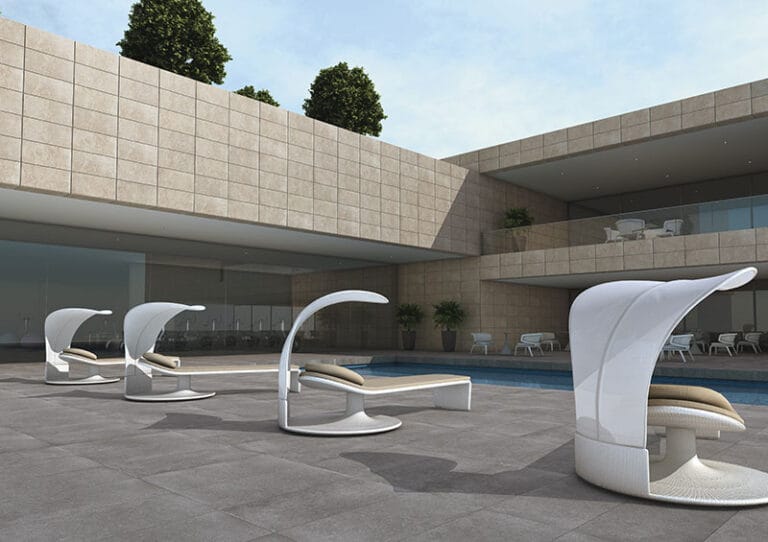
Porcelain tiles are often considered for exterior projects because many porcelain products have low water absorption and are manufactured in a wide variety of designs. However, not every porcelain tile is approved for outdoor flooring. Confirm the individual product’s intended application, surface finish and technical documentation.
Some ceramic tiles can also work in suitable exterior settings, but you should not assume that a wall tile or an indoor floor tile will perform outdoors. Check the manufacturer’s recommendations, especially for exposed or colder locations.
Natural stone can create a distinctive terrace, but stone type, finish, porosity, sealing requirements and maintenance vary. A polished interior marble finish, for example, should not automatically be specified for a wet balcony. If you prefer natural stone, ask about an appropriate finish and a care plan for that particular material.
To explore styles, browse Traboulsi Ceramica’s ceramics collection and marble collection. These pages show design options; outdoor suitability and current availability must be confirmed with the showroom for each selected product.
4. Choose a design that works with Lebanese light and architecture
Outdoor flooring connects a building to its surroundings. View large samples in daylight: a finish can look very different under direct sun than it does indoors.
Stone-effect and wood-effect designs
Neutral stone looks can complement traditional façades, while wood effects bring warmth to seating areas. Explore the ceramics collection for inspiration, then confirm the selected finish is rated for exterior use.
Large-format looks
Fewer visible grout lines can make a balcony feel calmer, but large formats require careful planning for drainage, substrate flatness and movement joints. Let the installation requirements guide the tile size.
5. Treat waterproofing and drainage as essential
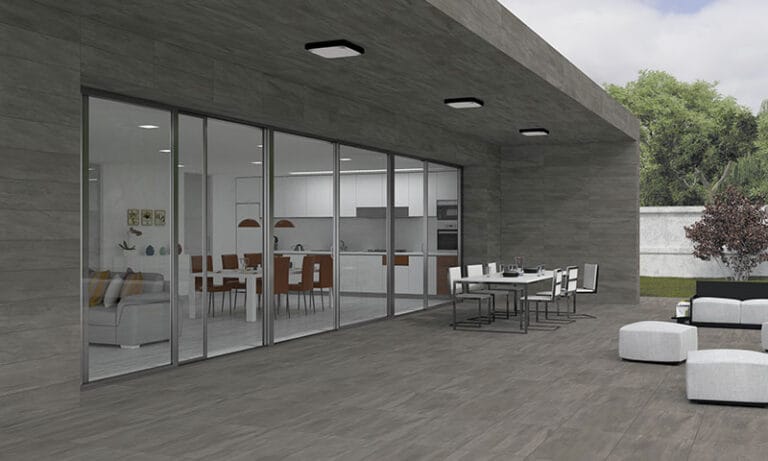
Even an excellent tile cannot compensate for a poorly designed balcony. Water must be directed to suitable drains or outlets, and the structure needs a waterproofing system appropriate to its construction. The required slope and assembly should be specified by a qualified installer or design professional, not guessed during tile laying.
Ask your contractor how the waterproofing connects to doors, walls, drains, balcony edges and any railings. These transitions are common places for trouble if they are not detailed correctly. The system should also manage water that gets beneath the tiled surface where relevant.
Installation-system manufacturer Schlüter-Systems describes why waterproofing, drainage and compatible exterior assemblies need to be planned together. Product and construction requirements vary by project, so use the relevant system’s current instructions.
6. Plan movement joints before installation
Outdoor tile installations expand and contract with temperature changes. A rigid surface without adequate movement accommodation may crack, lift or push against walls. Movement joints are therefore part of a sound installation, not a cosmetic afterthought.
Your installer should identify existing structural joints, perimeter gaps and any additional joints required for the exposed tiled area. Their position and spacing depend on the dimensions, sunlight, substrate and chosen installation system. Do not fill movement joints with ordinary rigid grout.
The Tile Council of North America explains why movement joints are needed and why exterior exposure matters. Ask your contractor to show the joint plan before work starts, particularly on long terraces or large uninterrupted areas.
7. Think about cleaning before choosing a texture
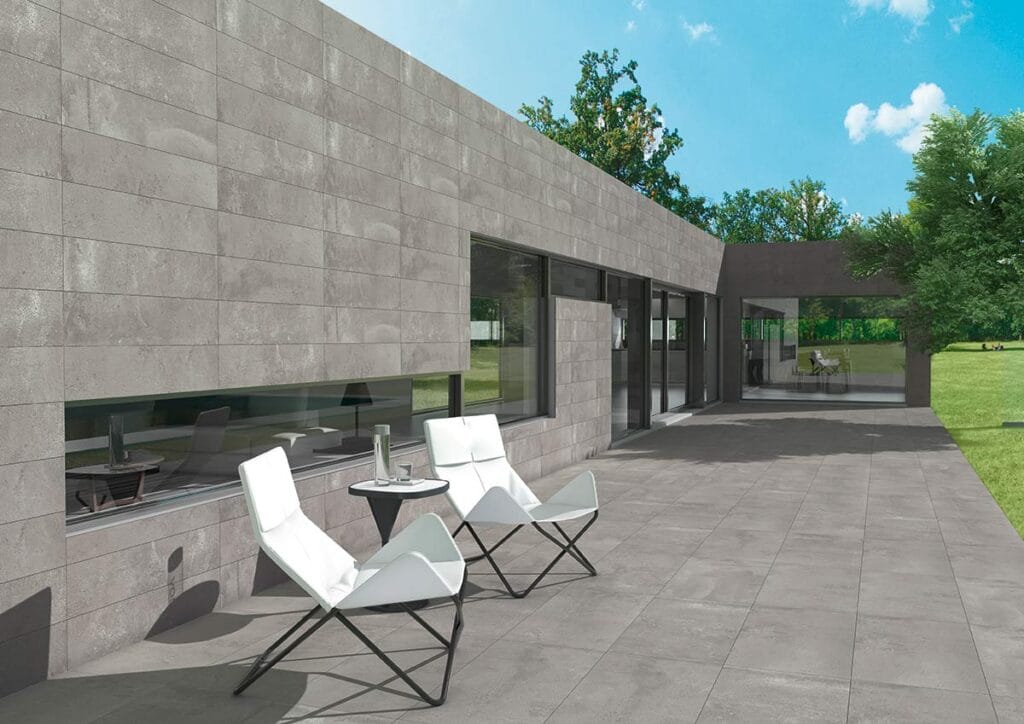
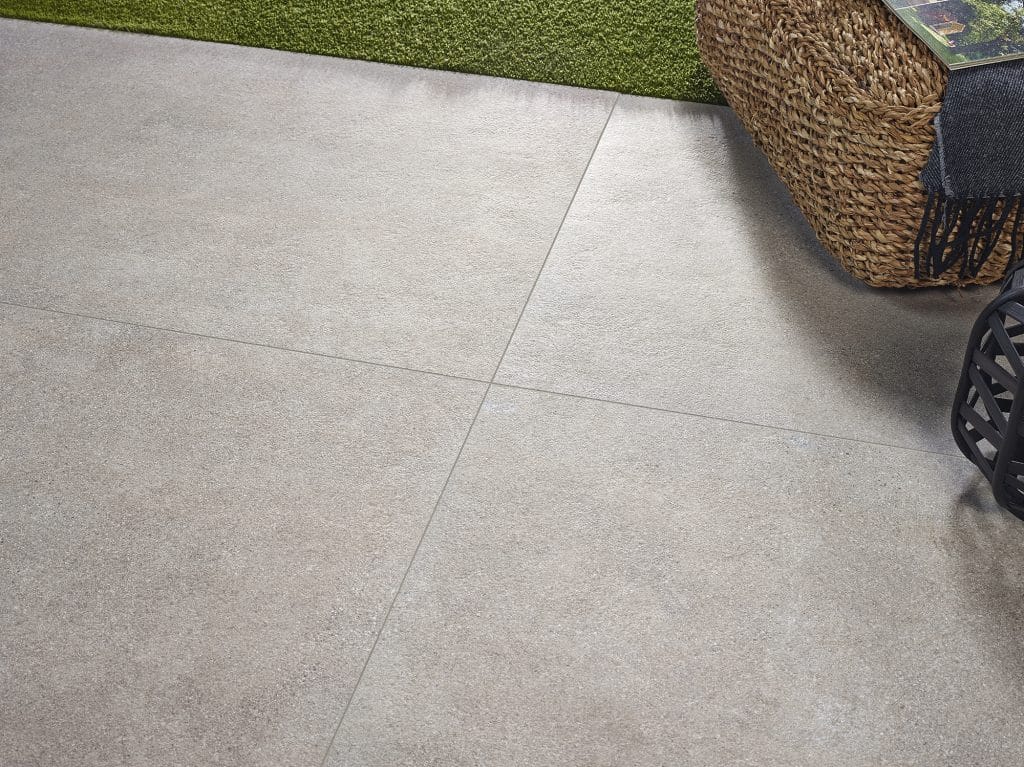
A heavily textured surface may provide useful traction but can trap more dirt than a smoother finish. Consider how often you will sweep, wash or maintain the terrace. A light-coloured tile can make a small balcony feel open, while darker shades may show some dust or mineral deposits differently. Neither is maintenance-free.
Request the manufacturer’s cleaning instructions and test any proposed cleaner on a spare piece first. Avoid assuming that acidic products, abrasive tools or pressure washing are suitable for every tile, grout or natural stone. For marble and other stones, cleaning and sealing advice should be specific to the material and finish.
8. Bring the right checklist to the showroom
A productive showroom visit starts with a few practical details. Bring:
- Photos of the balcony, terrace or patio, including doors, drains and exposed edges.
- Approximate floor area and dimensions, plus any stairs or level changes.
- Whether the area is covered, exposed to rain, coastal or in a colder mountain location.
- Your preferred appearance: stone effect, wood effect, neutral porcelain or natural stone.
- Your cleaning preferences and whether children, older adults or barefoot users regularly use the space.
Before placing an order, ask for confirmation of exterior suitability, slip-resistance information, the correct installation method, cleaning guidance, batch consistency and current stock. Also discuss a sensible allowance for cuts and future repairs with your installer; the quantity depends on the layout rather than a universal percentage.
Frequently asked questions about outdoor tiles in Lebanon
Are all porcelain tiles suitable for balconies?
No. Porcelain describes a type of tile, not an automatic approval for every outdoor application. Verify the exact product’s intended use and finish with the supplier.
Can I use the same tile indoors and outdoors?
Sometimes a design is offered in different finishes for different uses. Confirm that the specific exterior finish is suitable for wet conditions and that the transition between spaces is properly detailed.
Do outdoor tiles need waterproofing?
On balconies and roof terraces, waterproofing and drainage are critical parts of the building assembly. The appropriate system depends on the structure and should be designed by a qualified professional.
What should I ask about before buying?
Ask for the manufacturer’s application guidance, slip-resistance data, maintenance instructions, compatible installation system and confirmed availability for the quantity you need.
Find the right surface for your project
The best outdoor tiles in Lebanon balance design, traction, maintenance and a correctly planned installation. Start with the space itself, shortlist a few suitable finishes, then confirm the technical details before ordering.
Explore ceramic and porcelain-inspired designs or contact Traboulsi Ceramica to discuss your project. You can visit the Jdeideh showroom with your measurements and photographs to ask about available products and appropriate applications.
